The learning problem
Reading about electronics and deciding what to check at a bench are different tasks. I wanted a resource that connects explanations with structured practice: what to measure, why it matters, and how to record the result.
My contribution
I designed and built the course, its learning sequence, and its interactive practice tools with AI-assisted development. The project brings together my recent electronics experience and my longer background in instruction.
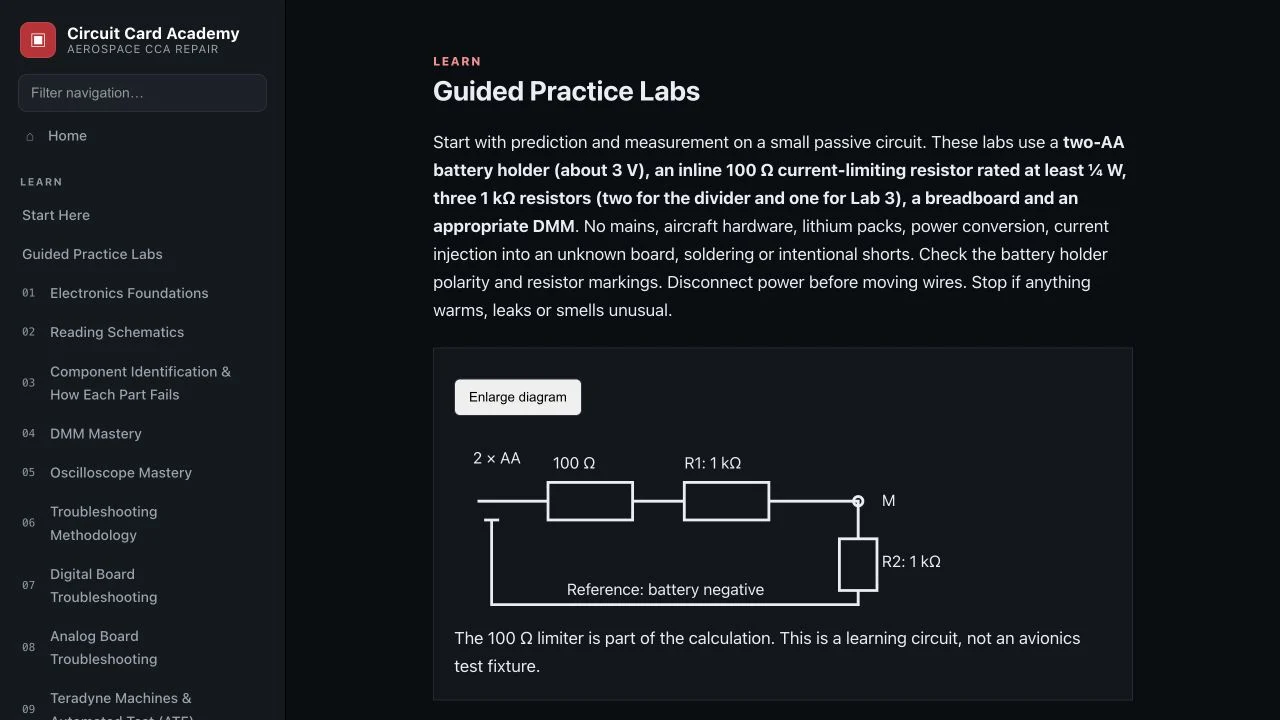
The site includes eleven learning modules, guided labs, fault drills, decision trees, and printable bench references. Its examples are educational exercises; they are not employer repair instructions.
Decisions you can inspect
- Make reasoning visible. Guided labs walk through measurement choices and what a result means.
- Give learners something to do. Fault drills and quizzes add practice to the reading.
- Support work away from the screen. A printable repair traveler and checklists give structure to notes and review.
- Keep access simple. Learners can explore the course without an account.
Explore the work
Course starting point · Guided labs · Printable traveler · Employer guidance
The boundary of the format
A web course can support study and diagnostic reasoning. Workplace qualification still needs supervised practice, authorized procedures, and an employer's assessment. Circuit Card Academy is an independent educational resource, not an accredited certification.
What it demonstrates
Learning design, clear explanation, practical documentation, and the ability to turn a complex subject into a resource people can explore at their own pace. The visible work is the evidence; I do not yet have measured learner-outcome results to claim.
Public course and linked examples reviewed September 13, 2026.